
- If you need tattoo correction in Kyiv, call or write to us immediately to book an appointment! We perform corrections, restorations and cover-ups of other artists’ work! The salon address and booking number are in Contacts!
- If you need to learn more about correction – when it is needed and when it is not – read the article below ⇓
When you think about your first tattoo, a bunch of questions usually appear: is correction always needed, how painful and safe it is, how long the session lasts, how to properly care for a fresh tattoo. It is best to get accurate answers at a consultation with a tattoo master. And to have a basic understanding right now, the masters of the “Alliance” salon explain whether tattoo correction is always needed. In this material we will analyze when correction is really necessary, when you can do without it, and how to avoid typical mistakes.
Key points in the article:
- Tattoo correction is not always needed if you follow the care rules, the master performed the work qualitatively and there were no additional factors affecting the pigment.
- Reasons for correction: master’s mistakes, unintentional impact on the pigment or improper care, as well as the body’s characteristics.
- Correction can be paid if the client is at fault, or free within the salon’s warranty.
- Approximately 3 weeks after healing you can assess the need for tattoo adjustment.
- Avoid problematic areas for tattoos such as fingers or palms (and areas near them) to need restoration less often.
Contents:
- What depends on the master
- Unsuccessful tattoo application due to client’s fault
- What depends on tattoo care
- Other reasons
- Current trends in tattoo correction
- FAQ: Common questions about tattoo correction
Also read interesting articles:
How to choose a tattoo master successfully
How to properly care for a tattoo
Painful places for tattoos
Can a master draw a tattoo sketch
What the price of a tattoo master’s work depends on
What depends on the master
Tattoo correction does not have to be done if you properly care for the tattoo healing. Masters who have extensive experience and perform work only with high-quality modern equipment, inks and materials usually do their job masterfully and flawlessly. However, for those who notice imperfections after healing, coming for correction is a rational step. This is normal practice, especially if the correction concerns fine details of the drawing. If you notice them in the tattoo, book a correction and the master will eliminate these shortcomings.
From our many years of practice in the salon, we see that 70% of clients do not need correction if everything is done correctly the first time.
Of course, correction will be needed if the master himself performed the work poorly. It happens that due to inexperience we choose not the best tattoo master, for example, lured by the low price of his services. There are many nuances of application that a good specialist must know.
If you turn to a beginner master (in this style) who does not have enough experience, and possibly low-level equipment and consumables, then it is quite possible that you will be dissatisfied with the result. In this case, do not panic or fall into depression immediately. Wait for the tattoo to heal completely (3–4 weeks) and book a free correction! The master will easily fix minor “nuances”, but if the master’s level is very far from quality correction, it is better to do a paid correction with another master. Often you can find a compromise and have the correction done by another, more experienced master right in the same salon!
Unsuccessful tattoo application due to client’s fault
There are three reasons due to the client’s fault for which tattoo correction is paid:
It happens that applying the drawing to the skin is quite painful or even ticklish. People with high sensitivity find it difficult to stay in one position during the session and they start twisting, jerking, etc. Thus the client greatly interferes with the master, and the lines he draws may come out uneven or imperfect. In this case, after the tattoo heals, correction will also be needed. And most likely it will be paid, because the fault is the client’s restlessness, not the master’s.
The client asks to make a tattoo on an area that is not suitable for tattooing. For example:
- tattoo on fingers;
- tattoo on the ribs of the palm or on the palm itself;
- tattoo on the foot or along it, etc.

The pigment holds very poorly in these places and the master must warn about it! If the client insists and the master agrees to do it (it is advisable to fix this agreement in writing), then subsequent corrections will be paid if there were no agreements about free corrections.
Also due to the client’s fault one can consider the situation with alcohol drunk before the tattoo or taking blood-thinning drugs (for example aspirin) that were not mentioned to the master. This will lead to the pigment being “pushed out” by blood during the procedure and poor fixation in the skin. This threatens blurry or faded tattoos immediately after healing. Again correction is needed and most likely it will be paid!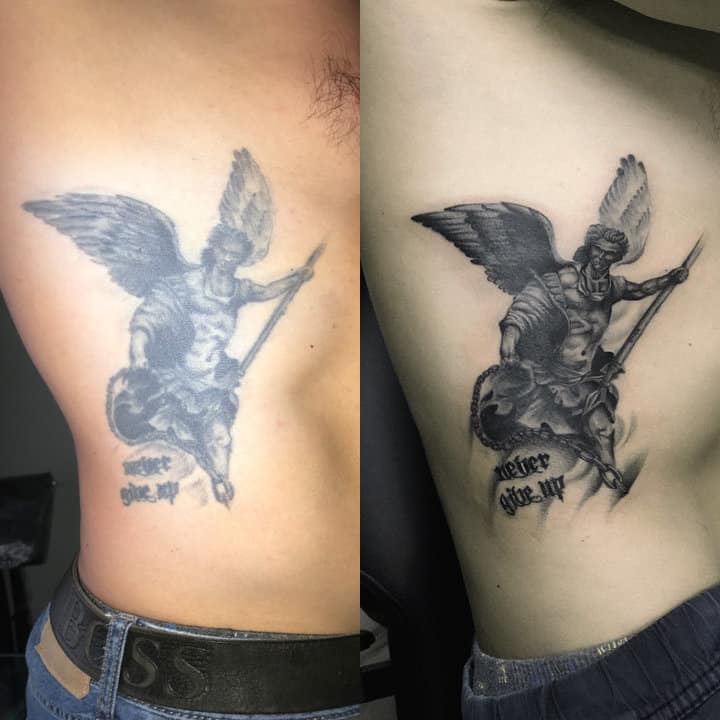
What depends on tattoo care
You need to properly care for the tattoo and wait until it is completely healed, at least three weeks. And only after complete healing should you contact the salon to the tattoo master who can adjust the work if you think correction is necessary. Such correction can be both free and paid – it depends on the “nuances” for which you want to do it. When changing the master, corrections are always paid, and the cost of correction can even be higher than the cost of the tattoo itself! It depends on the complexity of the correction and the new master’s pricing policy.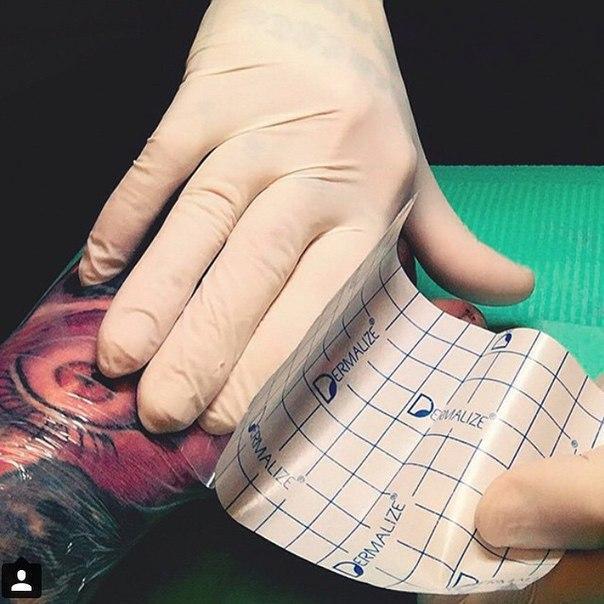
Another case when you will need correction and it will be paid – if you cared for the fresh tattoo incorrectly! Any experienced master will definitely tell the client how to properly care for the tattoo. With improper care, the paint can “run”, fall out, fade, etc. Therefore, do not peel off the scabs, steam the new tattoo in baths or swim in the river until it is completely healed. A spoiled work due to violation of care rules is corrected for a fee.
Other reasons
However, there are nuances that do not depend on either the client or the master. For example, a very thin or very small tattoo with small, fine details. When the lines in the tattoo are too thin, they may not be perfectly even or the paint may partially fall out or lighten immediately after healing or over time. Also the tattoo can be damaged by an “unfortunate accident”. In this case your master will do the correction at a minimal price.
Current trends in tattoo correction
We at “Alliance” have noticed an interesting trend: clients more and more often choose smart hybrid cover-up – a combination of laser lightening with the use of existing lines of the old tattoo as part of the new composition, in order to avoid dark spots and achieve a clean result.
Why this is a trend: Clients want quality renewal without radical changes, and the laser makes it possible to work with any styles, especially when old pigments interfere.
The essence: First 1–3 laser sessions to lighten saturated pigments, then the master fits the old drawing into the new plot using dynamic lines, contrasts and negative space, making the correction unnoticeable and aesthetic. Also other types of correction are trending:
| Trend | Description | Advantages |
|---|---|---|
| Smart Cover-up | Using existing lines and shadows of the old tattoo as part of the new composition + negative space and dynamic lines | No dark spots, unnoticeable renewal, maximum aesthetics |
| Hybrid correction (Laser + Rework) | 1–3 laser sessions to lighten the pigment + application of a new clean design | You can do thin lines, any styles, perfect result on complex tattoos |
| Fine Line Restoration | Restoration of “blurred” thin lines through Dotwork (dotted), without thickening | Preserves delicacy, looks natural even after 3–5 years |
| Blast-Over | Thick graphic black layer over the old tattoo (the old becomes the background) | Bold layered effect, does not hide but integrates the old |
| Color Revival | Reviving gray/faded tattoos with bright gradients (Watercolor, Neo-Traditional) | Quickly distracts from dullness, skin looks fresh |
These trends make tattoo correction simpler and more effective, allowing you to preserve the original meaning of the drawing.
FAQ: Common questions about tattoo correction
What is tattoo correction?
Sometimes after the skin with the tattoo has completely healed, you can see gaps or imperfections in the drawing. Then it is adjusted. This does not always happen, there are many reasons: from fine detailing to improper care. Corrections do not take long, up to an hour, are done no earlier than 2–3 weeks after application, and can be paid or free depending on the situation.
How soon after application is tattoo correction done?
Come for correction only after the tattoo has completely healed – no earlier than 2–3 weeks from the moment of application. If you look at the fresh drawing and something you don’t like, do not rush to conclusions. Until the skin heals, the final result is not visible. After healing the master will fix the imperfections.
Is it necessary to do tattoo correction?
Tattoo correction is not mandatory. In most cases, if you cared for it correctly, it is not needed, because masters work with quality equipment and materials. Come only if you yourself see nuances. For example, with very fine details this is normal. Book an appointment and the master will fix it.
How often do you need to do tattoo corrections?
Usually tattoo correction is either not needed or is done once after healing. But there are cases when the tattoo requires repeated restoration over time. This happens with problematic places such as fingers or feet. Experienced masters warn about this in advance or refuse to apply tattoos there.
How much does tattoo correction cost?
Questions about tattoo correction are always individual. For some it will not be needed, for some it is minimal and free, for others it is paid – the salon’s minimum price or hourly. Everything depends on the volume and reasons. Discuss with the master personally.
Is it painful to do tattoo correction?
Correction is similar to regular tattoo application, but lasts less, so the discomfort is minimal. If the original session was painful, the correction may be similar, but many clients say it is easier because the area is smaller. Talking with studio guests at consultations, I often hear that the pain is tolerable, especially with anesthetics.
Can you correct another master’s tattoo?
Yes, correcting someone else’s tattoo is possible, but it is always paid and may cost more due to complexity. It is better to choose an experienced master with a portfolio of similar works. Leading masters of our studio note that such corrections require careful evaluation at the consultation.
What to do if the tattoo has faded over time?
If the tattoo has faded over the years, correction will help renew the colors and contours. Over the years of work we have become completely convinced that regular renewal every 5–10 years keeps a fresh look. Book a consultation to assess the scope of work.